





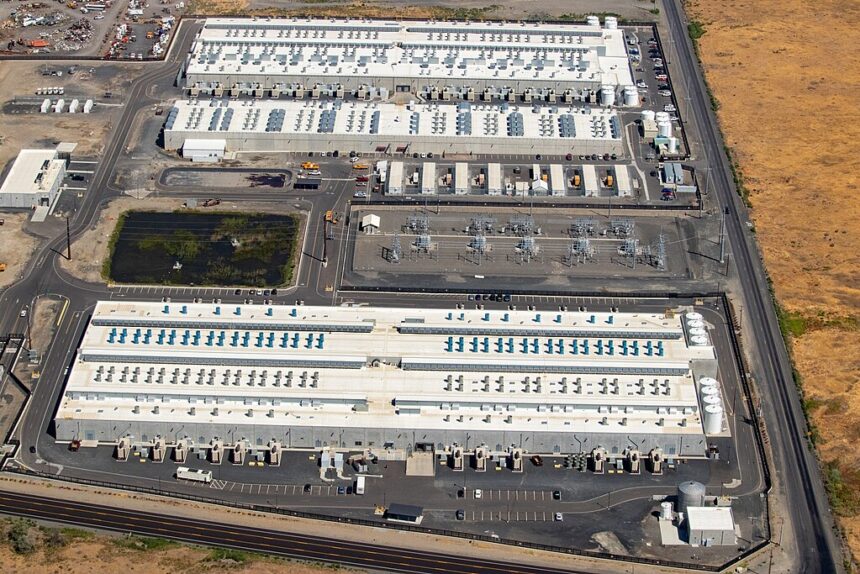

Morrow County, Oregon, has recorded nitrate readings as high as 73 parts per million (ppm) in household wells—more than ten times the state’s legal ceiling of 7ppm—following reports that local data centres are intensifying aquifer contamination. According to an investigation by Rolling Stone, the cooling systems used by Amazon Web Services (AWS) are concentrating existing pollutants in the water supply, a phenomenon experts are linking to a surge in miscarriages and rare cancers.
The Lower Umatilla Basin aquifer, the region’s primary source of drinking water, has historically suffered from nitrate runoff caused by local mega-farms and food-processing plants. But engineers and public-health experts now warn that AWS’s heavy water use has ‘supercharged’ the problem by concentrating nitrates during the cooling cycle.
The company’s data centres draw tens of millions of gallons from the same aquifer each year to cool its servers. Water leaves the centres hotter and, after partial evaporation, carries up to 56 ppm of nitrates when it is pumped back to the Port of Morrow’s treatment lagoons and then sprayed onto nearby agricultural fields. The porous soil saturates quickly, allowing the enriched wastewater to percolate back into the aquifer.
The health implications for the county’s residents are severe. State and federal guidelines set the nitrate limit at 10 ppm (with Oregon’s specific ceiling at 7 ppm) to prevent “blue-baby” syndrome, specific cancers such as non-Hodgkin lymphoma, and reproductive issues. With local wells now testing above 70 ppm, area clinicians have reported an unusual rise in both pregnancy loss and rare cancer diagnoses.
Amazon has pushed back against these findings. Spokesperson Lisa Levandowski stated that the company’s water usage is “only a very small fraction” of the basin’s total and described the groundwater issues as long predating AWS operations. She dismissed the claims in the Rolling Stone report as “misleading and inaccurate.”
Kristin Ostrom, executive director of the advocacy group Oregon Rural Action, said 40 per cent of county residents live below the poverty line and lack the political leverage to demand alternative water supplies. State agencies have delivered bottled water to a handful of households but have not committed to a comprehensive clean-water project.